
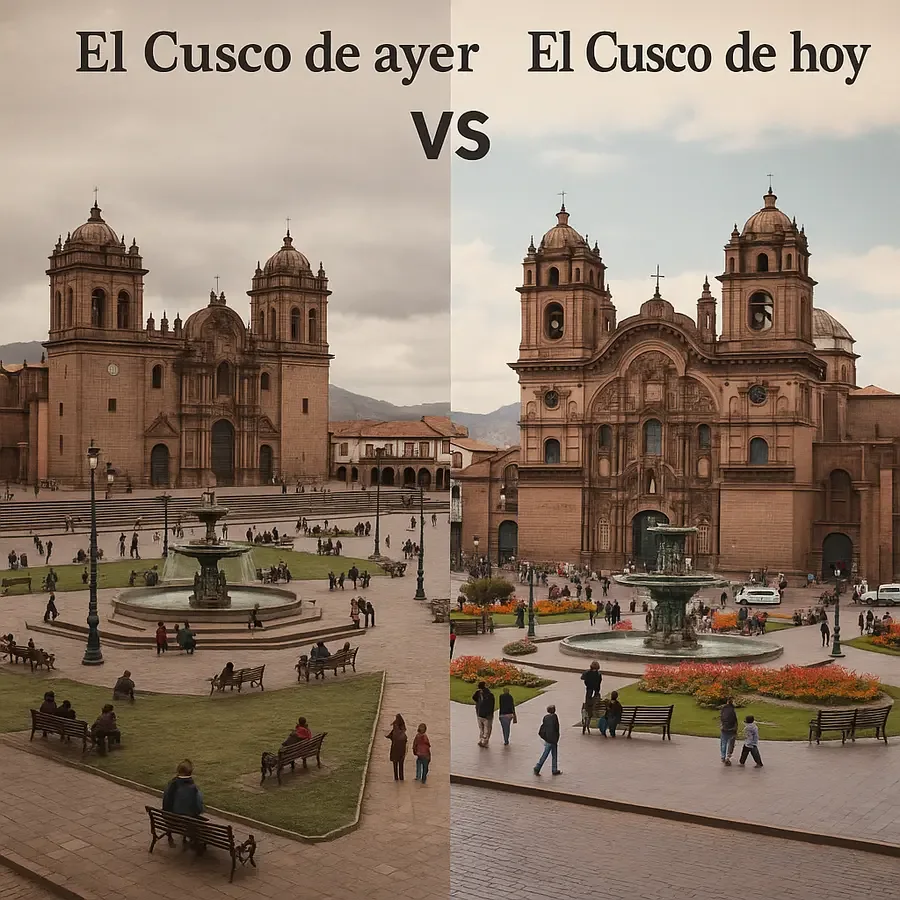
Cusco of Yesterday and Cusco of Today
For generations, Cusco has been the beating heart of the Andean world. In its cobblestone streets and Inca walls, the living memory of an ancient empire is preserved. But Cusco is not just an open-air museum: it is a city that breathes, changes, and adapts. And today, more than ever, that transformation is evident.
The Heritage That Resists
Until a few decades ago, life in Cusco followed an ancestral rhythm. Festivities from the agricultural calendar marked the community's times, colonial mansions still housed multi-generational Cusquenian families, and commerce was local, intimate, among neighbors. Children played in the streets of the San Blas neighborhood, chicherías opened mid-afternoon, and the Plaza de Armas was a shared space, not a storefront for tourists.
Tourism: Blessing and Challenge
Today, Cusco has changed. What was once a traditional city is now a tourist metropolis. The economy revolves around the visitor. Every year, millions of tourists arrive eager to experience Machu Picchu, but they also end up impacting Cusco's urban, social, and cultural fabric.
Entire neighborhoods have been displaced to make way for boutique hotels and international restaurants. Local craft shops coexist—and sometimes compete at a disadvantage—with imported souvenirs and foreign franchises. The historic center has gentrified. Living there is no longer an option for many middle-class locals.
Modernization Without a Compass
New housing developments are expanding up the slopes where there used to be only small farms (chacras). This has led to the loss of sacred landscapes and created risks of landslides. Public transportation is inadequate. And although Cusco grows, it does not always do so with planning.
Added to this is the pressure to build cable cars, vehicle access roads, and megaprojects that threaten to alter the essence of iconic places. The balance between development and respect for heritage is fragile, and in many cases, it has been broken.
Cultural Resistance
Despite everything, the Cusquenian spirit has not surrendered. The dance troupes (comparsas) still dance during the Corpus Christi festivities. Neighborhood markets, like the San Pedro market, remain active, though facing threats from real estate speculation. Young Andean artists, musicians, and filmmakers are revitalizing Quechua, blending ancestral rhythms with modern genres, and fighting to tell their own story.
Citizen organizations have also begun to defend the right to a Cusco for Cusquenians. They advocate for laws protecting intangible heritage, incentives for residents of the historic center, and projects that combine tradition with sustainability.
What Future Do We Want?
The Cusco of yesterday must not be just a romantic postcard. And the Cusco of today does not have to become a soulless theme park. There is a third way: a modern Cusco that does not forget its roots. One that dares to develop without tearing away its skin.
Today more than ever, it is vital to ask ourselves: do we want our children to know the real Cusco, or just the Cusco that we sell?
AI translation of the original Spanish article. The author’s voice and cited sources remain in their original language.
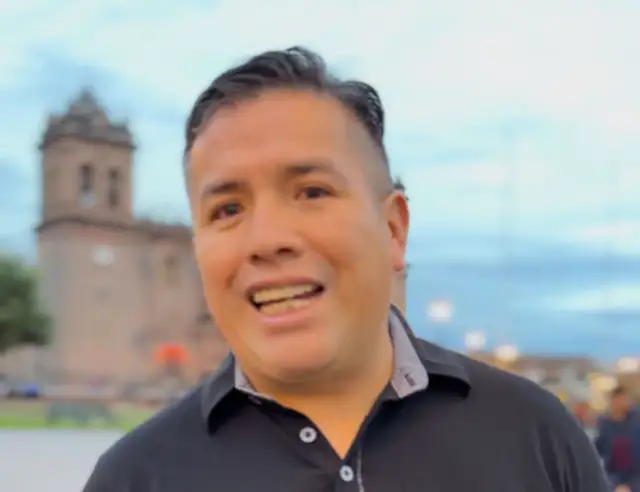
Author’s contribution
I am Ramiro, a Cusquenian, entrepreneur, and passionate about music and technology. I enjoy giving new life to popular songs through symphonic reinterpretations using artificial intelligence. At RAMIROBIZ, I share my creations and projects:
Editorial process
Content recovered from the previous site. The export file does not document whether there was AI assistance in its drafting.
Editorial history
Published 17/05/2025. Updated 18/10/2026.